
Strength and Deconditioning
On armor, overwhelm, and what it actually takes to get stronger

With one foot in the yoga studio and another in the gym for over 20 years, I often refer to myself as a strength and deconditioning coach. While the athletic meaning of conditioning refers to cardiovascular capacity, I’m looking at the broader condition of our daily lives. People show up to my classes “out of shape” not because they’ve been sitting on the couch but because they’ve been parked at a desk, raising kids, and struggling to keep things together in an era when it feels like everything is always falling apart.
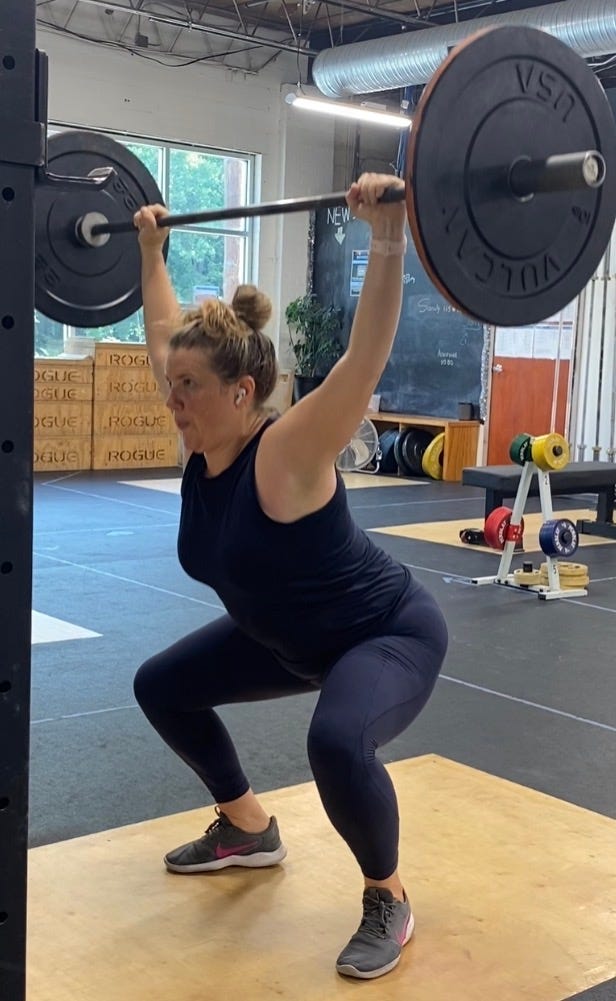
Getting into shape means reclaiming a body that is wired, tired, and numbed out. And yet wellness keeps lacquering on additional expectations, chasing the next diet, performing the latest protocol, piling more onto bodies that are already overwhelmed.
I’ve learned to read the patterns: how we work, whether we still play, and all the emotional baggage we schlep around. How to take a body that is out of whack, reset its posture, reframe its relationship to effort, and actually get stronger. Strength training is as much undoing as it is doing. It’s simple but not easy, because we are humans.
The Loads We All Carry
Every body carries loads. Every body solves physical problems every day, and every body has deeply ingrained patterns for getting the job done. The dentist hovering over mouths, the warehouse worker pulling ten-hour shifts on concrete, the desk jockey grinding through Microsoft Teams meetings for hours: the shoulders tense up, the eyes narrow, the breathing gets shallow, the hips stay locked in flexion. After a few decades in the same postures and perspectives, specific parts of the body get stuck, too tight, overstretched, and numbed out.
Feeling drained at the end of the day, at the gas pump, at the grocery store checkout, makes sense when daily life is inherently extractive. But we don’t all carry the same loads. The nurse working overtime to feed her family is not the same an executive with a staff of people managing his life. We don’t all carry the same metabolic and mental burdens.
Unpaid (Emotional) Labor
The invisible loads are often the heaviest. We are constantly pummeled with news that is baffling and heartbreaking, while the kids need to get to practice and the car needs an oil change and there’s email and meetings and dishes to be done. As an average American who is working, paying attention, and actually gives a damn, the expense of daily life plus the unrelenting existential toll accumulates and begins to thwarts our movement.
We down the coffee, build up the defenses, and eventually hit our threshold. We contort around our deepest insecurities, calcify around unresolved traumas, and keep going anyway, walking around with open wounds, which honestly all of us are. Too wrung out to stay open, we clam up around whatever feels protective, showing up and acting like we have our shit together.
Armored Up
Armor isn’t only a survival strategy, it’s also an identity. The strongman mentality takes it to the extreme, downing peptide stacks and banging out chest presses. Just punish yourself with exercise, adhere to strict dietary regimes, track every biomarker, follow the YouTubers who seem to have it all figured out. The promise is that you can escape your insecurities and lack of security by achieving the image.
Whether it’s masculine coded as muscular, feminine coded as skinny, or the current hybrid: extremely thin and also visibly muscular (as typified by Lauren Sanchez Bezos and Demi Moore). Male, female, or anywhere in between, the message is clear: your body needs a lot of work. Beyond eating healthy and exercising regularly, you can be endlessly injected, implanted, and botoxed until you look cartoonish. Dressed up as extreme self-care, the pursuit of “wellness” has morphed into systematic armoring. In times of uncertainty your body can become a specimen of predictability and imperturbability.
But you can never be perfect enough. Most of our insecurities are a marketing scam and our lack of security is a policy decision. As ecosystems and institutions collapse around us, take an anti-inflammatory supplement. Feeling powerless? Up the protein. Feeling confused and overwhelmed? Follow the nearest self-appointed wellness guru, who will tell you exactly how to eat, move, and sleep while constantly selling you something else to obsess over. You won’t even notice the jet stream collapsing. You too can be perfect and immune.
Conclusion
What if deconditioning was just finding our power under all the BS? Regularly reminding ourselves our power actually lives, regardless of whether you have visible biceps.
Despite living in an inherently extractive economy and contending with crumbling institutions, we can practice what is simple and regenerative. We can be disciplined without being blindly obedient. We can tend to ourselves without being self-absorbed. We can move our bodies without punishing them. We can stay anchored and energized when everything feels like too much. We can build community in at every squat rack and at each yoga mat along the way.
My next post gets more practical: how to train tension skillfully, why movement patterns matter more than muscles, and what it actually looks like to get stronger without armoring up further.
Looking forward to this next series of posts!